Reports
تغطية صحفية وتقارير مفصلة عن تطورات الأحداث
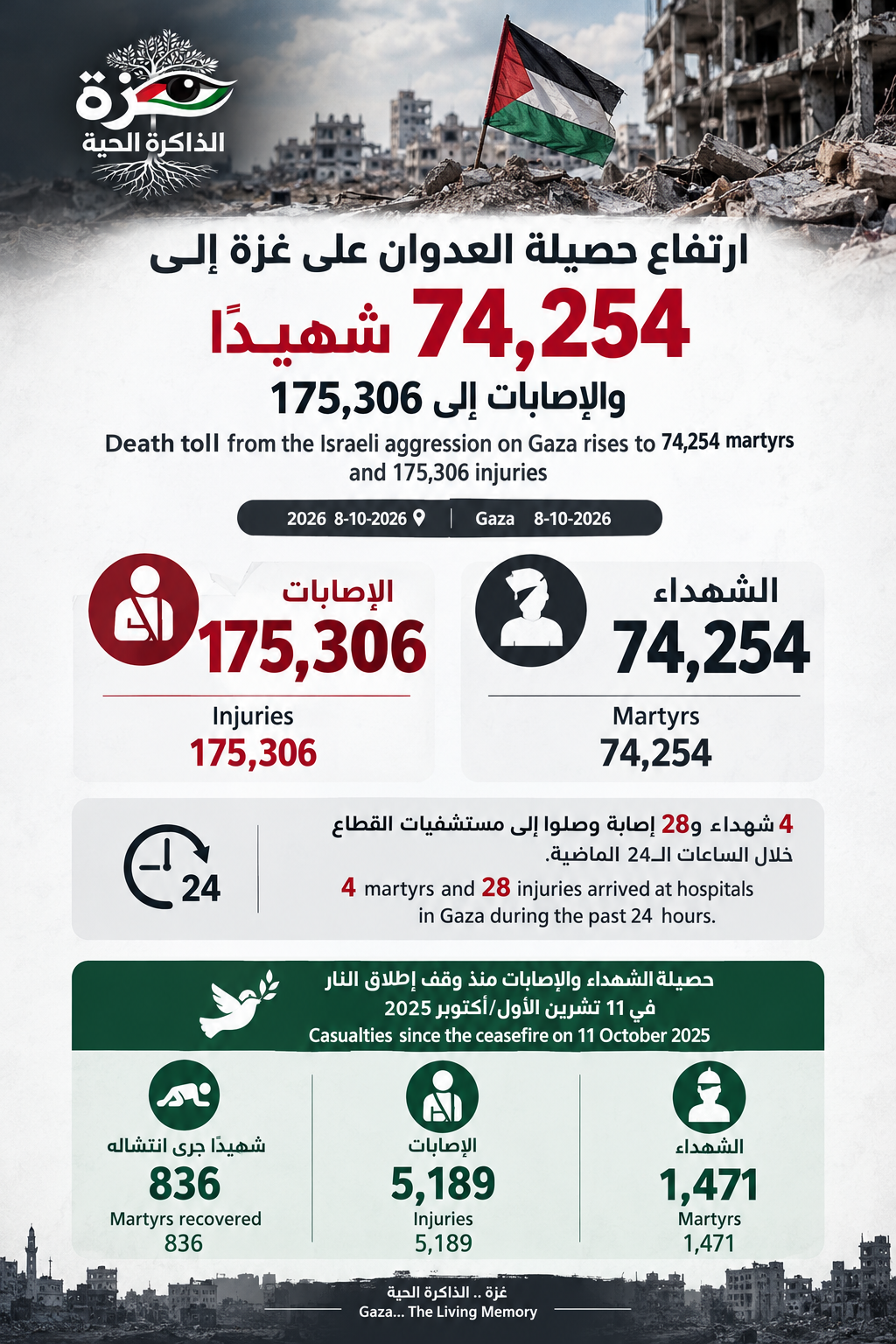
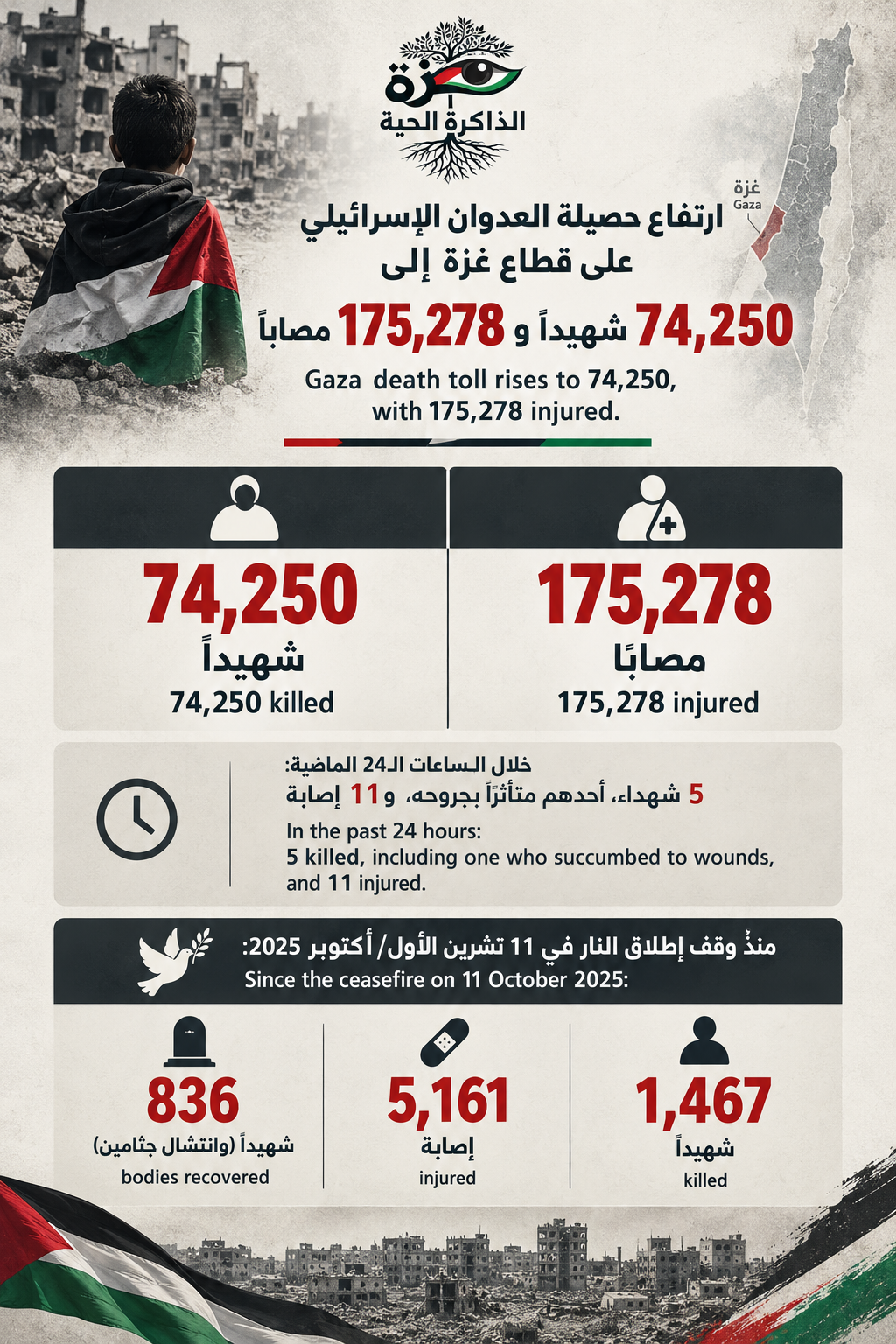
Death Toll in Gaza Strip Rises to 72,996, Injuries to 173,246 Since the Start of the Aggression
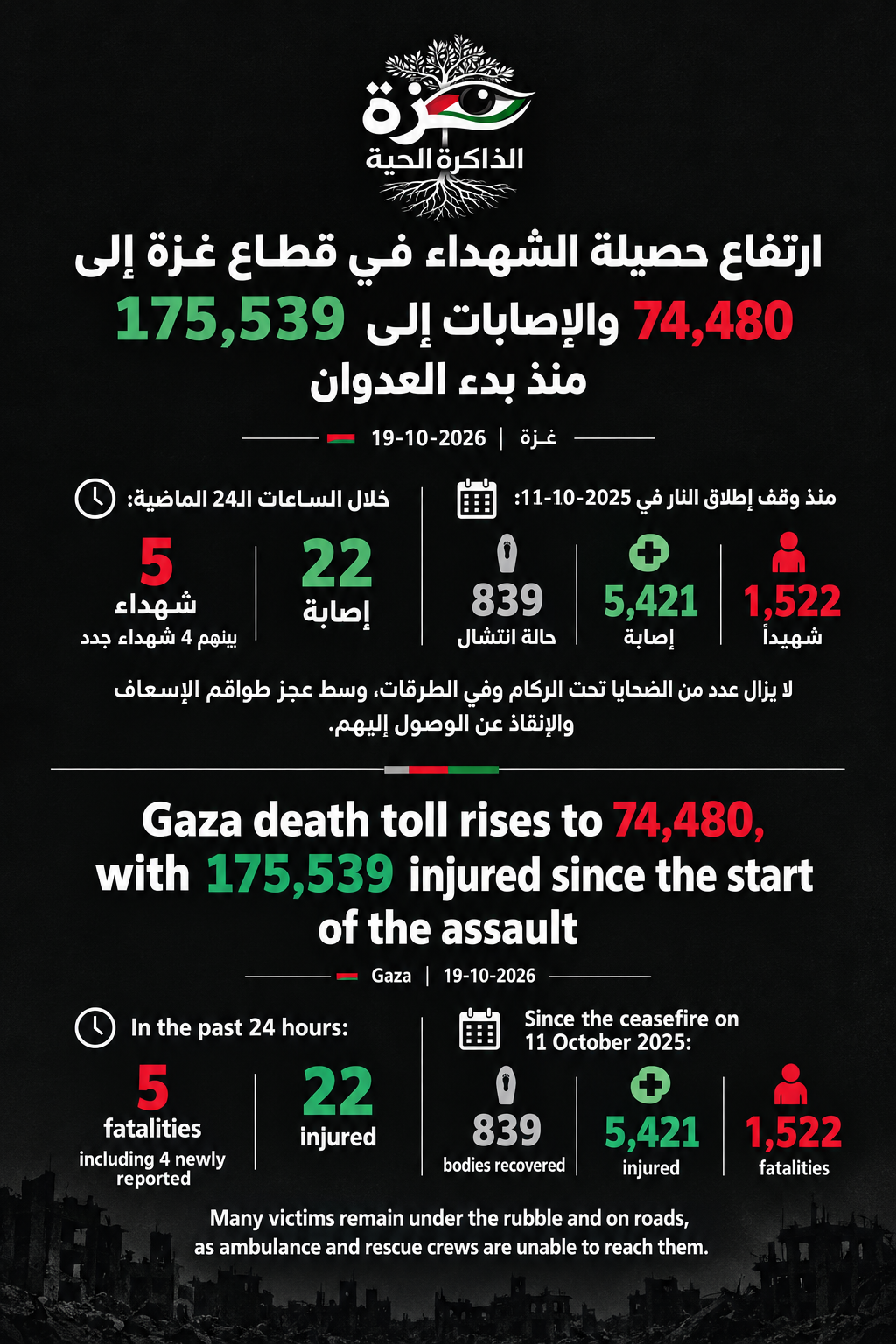
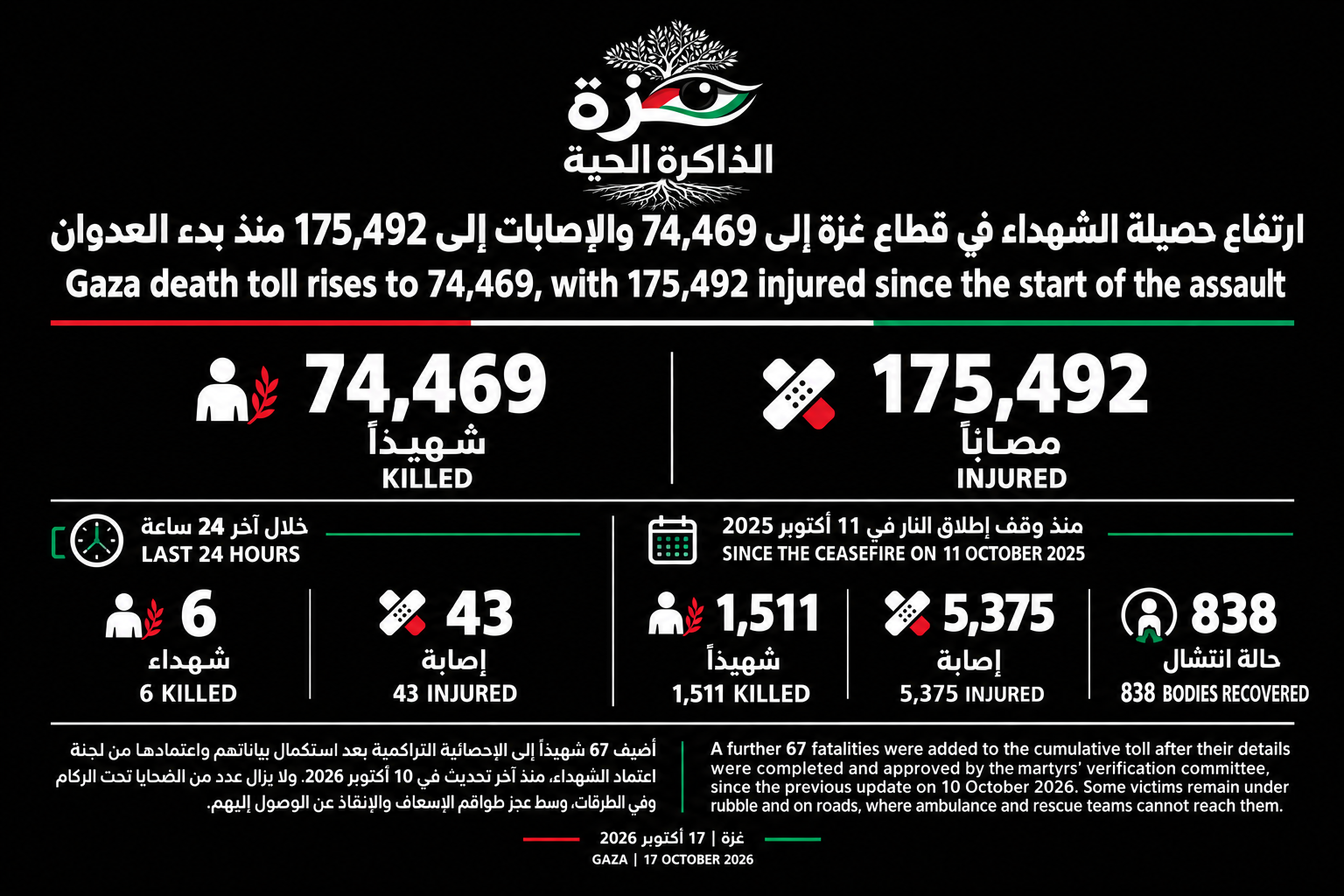
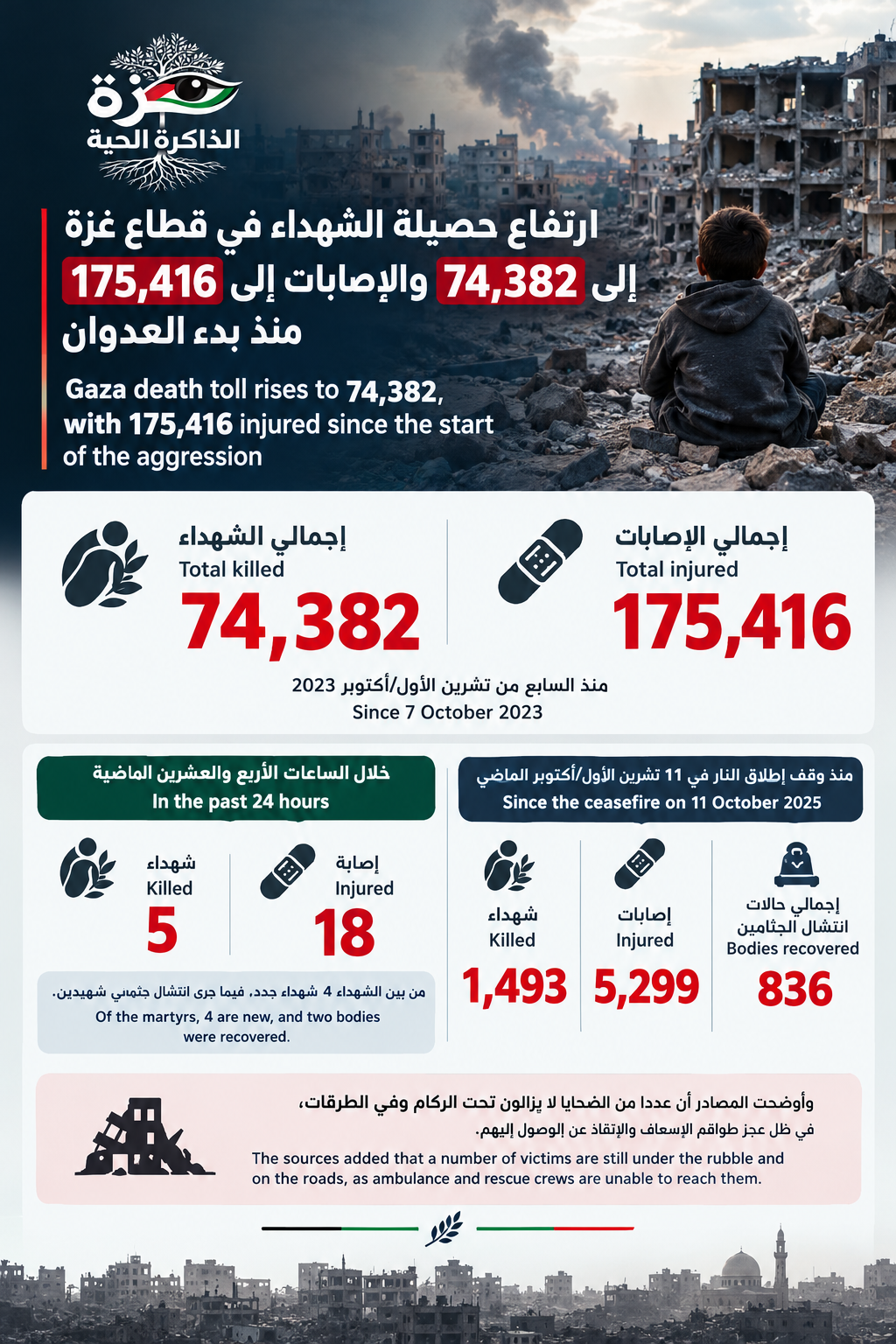
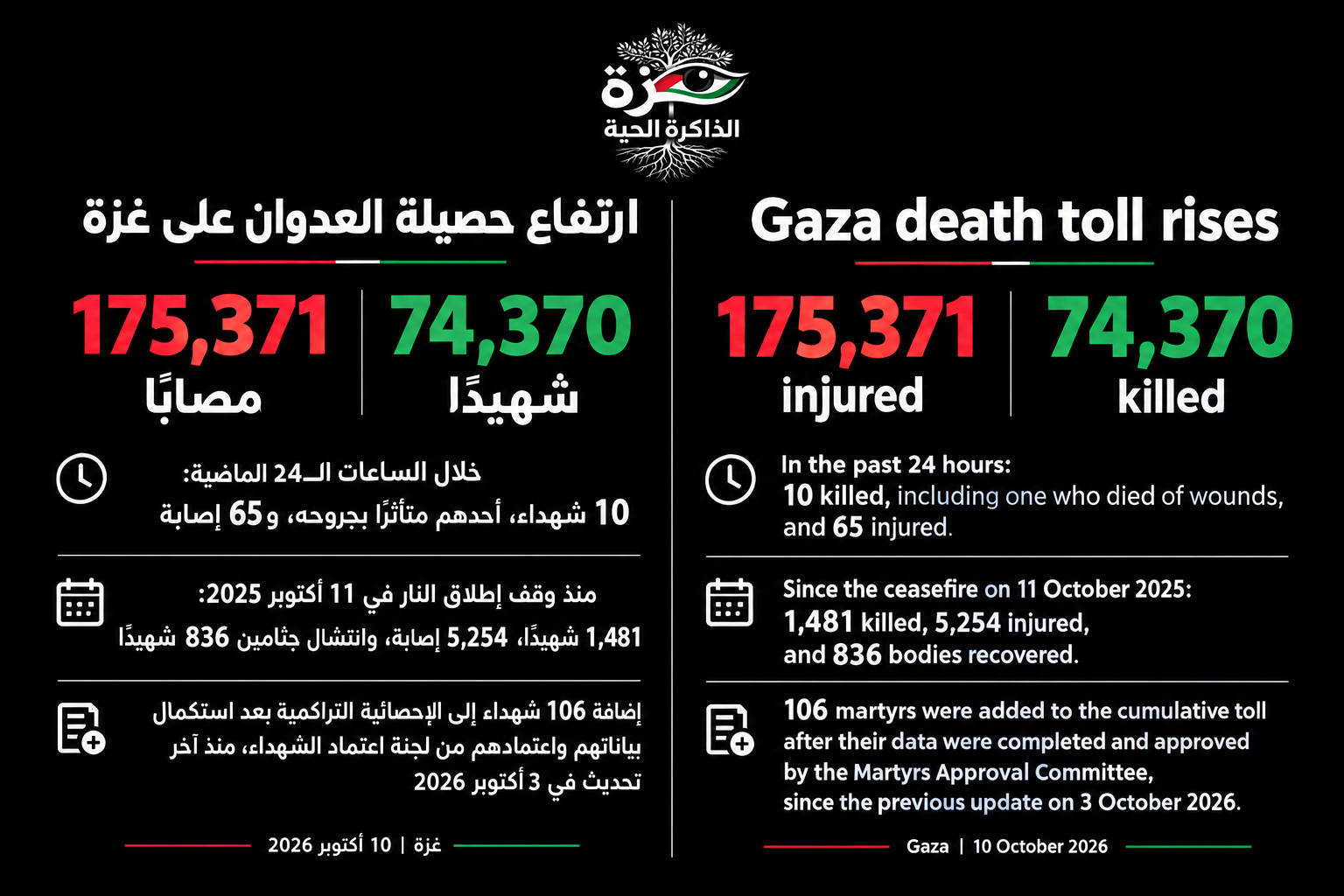
Gaza — Medical sources in the Gaza Strip announced today, Sunday, that the death toll from the ongoing Israeli occupation aggression on the Strip has risen to 72,996 martyrs and 173,246 injuries since the beginning of the aggression on October 7, 2023. The sources reported that over the past 24 hours, hospitals in the Gaza Strip received 3 new martyrs and 16 injuries. They also indicated that: The total number of martyrs since the ceasefire on October 11 of last year has risen to 986. The total number of injuries since the ceasefire has reached 3,138. A total of 783 bodies have been recovered during this period. The sources emphasized that a number of victims still remain under the rubble and on the streets, as ambulance and rescue crews are currently unable to reach them..
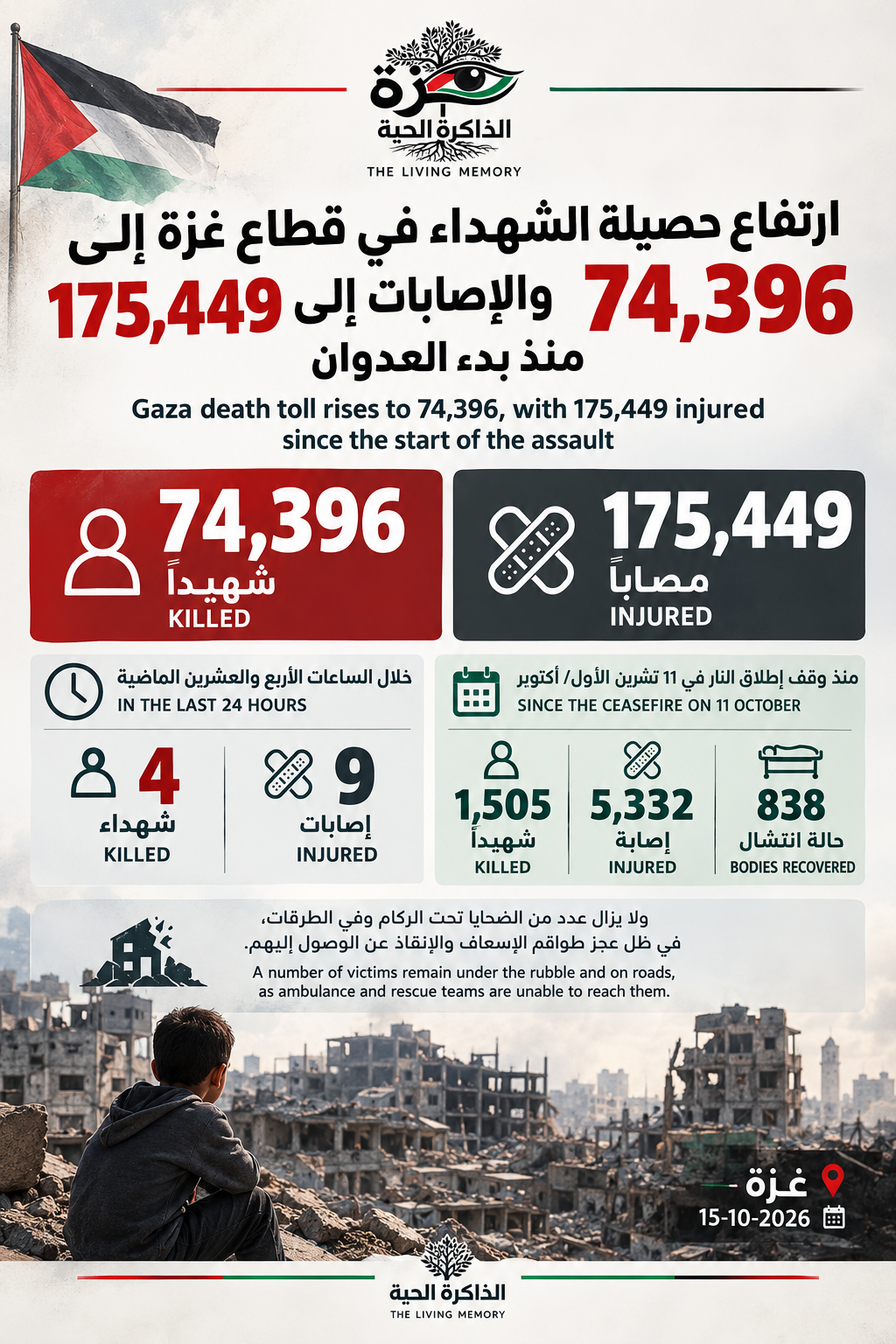
Death Toll in Gaza Strip Rises to 72,993, Injuries to 173,230 Since Onset of Aggression
GAZA, June 13, 2026— Medical sources in the Gaza Strip announced today, Saturday, that the death toll from the ongoing Israeli occupation aggression on the Strip has risen to 72,993 fatalities and 173,230 injuries since the beginning of the aggression on October 7, 2023. The sources reported that hospitals in the Gaza Strip received two fatalities and 11 injuries during the past 24 hours. They indicated that the total number of fatalities since the ceasefire took effect on October 11 last year has risen to 983, while total injuries reached 3,122. Additionally, 783 bodies have been recovered during this period. The sources further noted that a number of victims remain trapped under the rubble and on the roads, as ambulance and rescue crews are still completely unable to reach them up to this moment.
Gaza’s Wounded Abroad: The Medical Evacuation Journey Between Closed Crossings and Long Waiting Lists (October 2023 – June 2026)
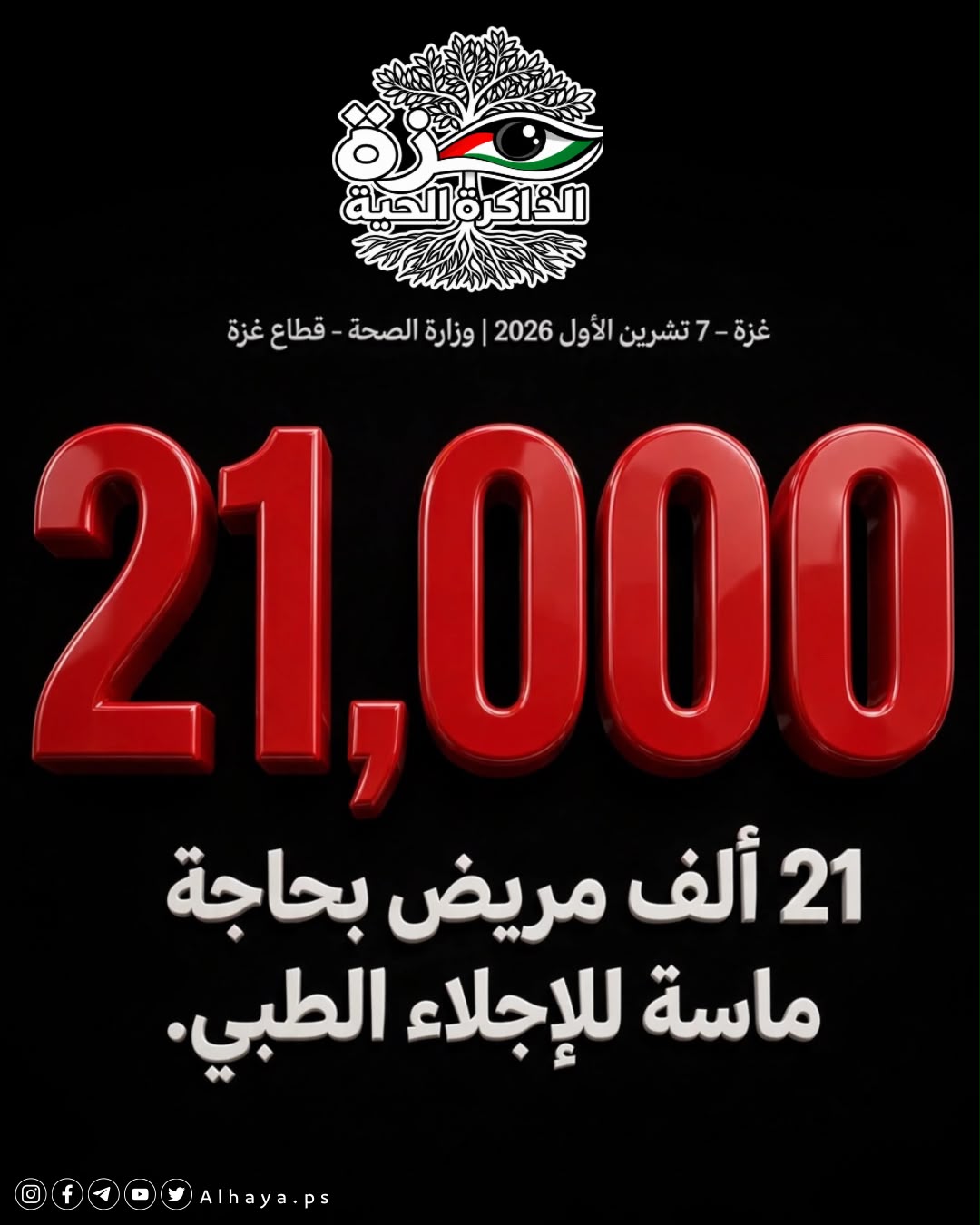
Gaza: The Living Memory— Since the outbreak of the war on the Gaza Strip on October 7, 2023, the medical evacuation of the wounded and sick has transformed into one of the most pressing and complex humanitarian issues. With the widespread collapse of the healthcare system and damage sustained by most hospitals, treating severely injured individuals inside the Strip was no longer viable, making external medical evacuation the sole option to save many lives. However, the path to receiving treatment outside Gaza has been fraught with difficulties. Between closed border crossings, logistical constraints, and a shortage of available beds in receiving international hospitals, tens of thousands of patients found themselves stranded on long waiting lists as their health conditions deteriorated day after day. According to data from the World Health Organization (WHO) up to February 2026, at least 11,124 patients and wounded individuals have been evacuated from the Gaza Strip since the start of the war, accompanied by more than 13,000 caregivers. Among the patients who managed to leave the Strip were approximately 5,835 children. The data shows that the vast majority of evacuations took place during the initial months of the war, prior to the closure of the Rafah crossing in May 2024, during which more than 7,500 patients left the Strip. Following the closure, evacuation rates plummeted drastically, shifting from hundreds of cases per week to extremely limited numbers. According to the WHO, more than 18,500 patients and wounded individuals remain in desperate need of medical treatment that is unavailable inside Gaza. This includes thousands of individuals suffering from complex war injuries, chronic diseases, and cancerous tumors. --- ### Who Needed Treatment Outside Gaza? The medical evacuation waiting lists encompass diverse categories of casualties, most notably: * Amputees requiring reconstructive surgeries and advanced prosthetic limbs. * Patients with severe spinal cord and vertebral injuries. * Complex traumatic brain and cranial injury cases. * Individuals with extensive, large-scale burn injuries. * Children requiring specialized surgical and reconstructive interventions. * Cancer patients whose treatment regimens were entirely halted. * Patients suffering from heart disease, kidney failure, and other chronic illnesses. WHO estimates indicate that thousands of the wounded suffer from "life-altering" injuries—traumas that will stay with them for years and demand specialized treatment and rehabilitation currently unavailable inside the Gaza Strip. --- ### Where Were the Wounded Transferred? Several countries received patients arriving from Gaza, most notably: * Egypt * Jordan * The United Arab Emirates * Qatar * Turkey * Spain * Italy * Germany * France * Norway * Belgium * Romania * Other European nations participating in medical evacuation programs. According to the WHO, 17 European countries have received patients from Gaza to provide specialized medical care, with the number of individuals transferred to Europe alone surpassing 1,000 patients by late 2025. --- ### Gaza's Children at the Top of Evacuation Lists Children constituted the largest percentage of many medical evacuation operations, given the critical nature of their injuries and their acute need for complex surgical interventions. WHO data indicates that thousands of children were placed on waiting lists for treatment abroad, while substantial numbers were successfully evacuated to specialized hospitals across Europe and the Arab world. --- ### Fatalities While Waiting One of the most tragic dimensions of this issue involves the patients who were unable to leave the Strip in time. International reports highlight the deaths of hundreds of patients and wounded individuals while waiting for medical evacuation or awaiting the necessary travel clearances, including children, cancer patients, and critical cases that required immediate medical intervention. --- ### Why Did Thousands of Wounded Remain Inside Gaza? Despite ongoing evacuation efforts, the number of individuals who managed to leave the Strip represents only a fraction of the actual needs. The primary reasons for this shortfall include: * The restricted and limited operation of border crossings. * The constrained receiving capacity of host hospitals. * Pervasive administrative and logistical complexities. * Deteriorating security conditions on the ground. * A severe shortage of specialized medical transportation vehicles. --- International organizations have documented cases of children who lost limbs or suffered severe burns and deformities being transferred for treatment abroad only after months of waiting. Evacuation operations also included patients with complex brain injuries, paralysis resulting from spinal cord trauma, and individuals requiring dozens of successive reconstructive surgeries. More than two and a half years since the outbreak of the war, the medical evacuation file remains wide open. While over 11,000 sick and wounded individuals left the Strip for external medical care, more than 18,500 people are still in need of specialized treatment unavailable within Gaza. Medical estimates suggest that clearing this backlog of cases could take years, even if evacuation operations are significantly scaled up. Consequently, receiving treatment outside Gaza is no longer merely a medical procedure; it has become a vital lifeline for tens of thousands of wounded and sick individuals facing one of the largest healthcare and medical referral crises in the modern history of the Strip..
Gaza’s Wounded: An Ongoing War and Injuries Outlasting Decades Thousands of Amputations and Disabilities Amid a Collapsed Healthcare System
Gaza: The Living Memory— Latest estimates from the World Health Organization (WHO) indicate that the number of injured individuals in Gaza since October 2023 has exceeded 172,000. Among them, approximately 43,000 people, including around 10,000 children, have suffered "life-altering" injuries that require long-term care and rehabilitation. Despite limited medical evacuations abroad, the vast majority of the wounded received treatment inside the Gaza Strip, within hospitals and medical centers already suffering from acute shortages of beds, medications, surgical supplies, and specialized medical personnel. The WHO notes that more than 18,500 patients and wounded individuals were awaiting medical evacuation as of 2026, meaning that tens of thousands were forced to seek treatment locally despite severely restricted capacities. Regarding the nature of the injuries, WHO data reveals that limb injuries constituted the largest category among the wounded, with more than 22,000 people sustaining severe injuries to the arms or legs, many resulting in extensive damage to bones, tissues, and nerves. Additionally, more than 5,000 cases of limb amputations directly linked to war injuries were recorded, along with over 3,400 severe burn injuries, more than 2,000 spinal cord injuries, and over 1,300 severe traumatic brain injuries. Amputation injuries remain one of the most complex files. According to WHO data, more than 2,270 amputees were evaluated between 2024 and 2026; however, only about 500 were able to secure permanent prosthetic limbs due to severe shortages of necessary equipment and materials. Furthermore, 76% of the recorded amputations involved the lower limbs, with nearly a third being above-the-knee amputations—which are among the most complex cases in terms of rehabilitation and mobility restoration. Spinal cord injuries, which exceeded 2,000 cases, have left thousands of patients requiring specialized care and rehabilitation for years to come. Health reports indicate that a portion of these patients suffer from permanent or partial mobility disabilities, demanding wheelchairs, assistive devices, and continuous rehabilitation services at a time when rehabilitation centers in Gaza face extreme shortages of equipment. In the burns file, over 3,400 severe burn injuries were documented, many among women and children. These cases require recurrent surgical interventions, skin grafts, and long-term treatment, compounding the immense pressure on hospitals operating under extraordinary circumstances. The WHO also documented more than 13,000 patients registered for limb reconstruction and reconstructive surgeries between mid-2025 and mid-2026. Evaluations revealed that nearly half of these cases require additional surgeries to reconstruct damaged bones or tissues. On the healthcare services front, the challenge was not limited to the volume of casualties, but extended to the collapse of a massive portion of the healthcare system itself. By 2025, fewer than 14 out of 36 hospitals were functioning, and even then, only partially. Meanwhile, the number of operational rehabilitation centers plummeted to less than a third of their pre-war capacity. Waiting lists in some rehabilitation departments exceeded hundreds of patients, forcing many hospitals to discharge patients before completing their treatment to make room for new influxes. Regarding children, international data indicates that approximately a quarter of the life-altering injuries occurred among children—meaning that nearly 10,000 children sustained disabilities or severe injuries that will accompany many of them for years. Medical data from field hospitals supported by Médecins Sans Frontières (MSF / Doctors Without Borders) showed that children accounted for a significant percentage of injury cases requiring long-term follow-up. The suffering of the wounded is not confined to physical trauma alone. Health and humanitarian organizations emphasize that tens of thousands suffer from severe psychological impacts linked to losing limbs, family members, or enduring horrific injuries, making psychological and social rehabilitation an indispensable pillar of the treatment and recovery process. More than two and a half years since the outbreak of the war, the file of the wounded in Gaza is no longer an emergency medical crisis; it has transformed into one of the largest long-term rehabilitation and disability crises in the world. Amid more than 172,000 injured, 43,000 life-altering conditions, and thousands of amputations, spinal cord injuries, burns, and brain traumas, Gaza's healthcare system faces a challenge that spans decades into the future—even after military operations cease—driven by the critical need for continuous treatment, reconstructive surgeries, prosthetics, and ongoing rehabilitation for tens of thousands of casualties..
Gaza Reconstruction and the Efforts of the Palestinian Government under Prime Minister Mohammad Mustafa.. Emergency Management and Stabilizing the Recovery Path Amid Widespread Destruction (2024–2026)
Since the outbreak of the war on the Gaza Strip in October 2023, reconstruction-related fieldwork has shifted from traditional infrastructure projects to large-scale emergency interventions aimed at reopening the basic arteries of life in a largely devastated environment. During the initial phase, efforts have focused on four main tracks: roads, shelter, housing, and essential service and heritage sites. According to cumulative estimates issued by Palestinian authorities and supported by UN and field reports up to 2026, intervention levels remain partial and limited compared to the scale of destruction, yet they reflect the early stages of reshaping basic services on the ground. First: Road clearance and restoring internal mobility Technical estimates indicate that the Gaza Strip has a road network of more than 2,500 kilometers, including main and secondary roads, a large portion of which has been directly damaged or blocked by rubble. Within emergency reconstruction efforts: Hundreds of kilometers of key urban roads have been partially reopened or cleared Main corridors linking shelters, hospitals, and service centers have been reopened Rubble removal operations have taken place in major streets in Gaza City, Khan Younis, and central Gaza areas Field estimates suggest that the proportion of roads that have undergone direct intervention (partial clearance or reopening) remains below 20% of the total network, while the majority still requires full reconstruction or major rehabilitation. Second: Shelter and emergency housing (tents) With the collapse of the housing sector, shelter has become an urgent humanitarian priority. UN data indicates that hundreds of thousands of families have been internally displaced during the war. As part of the response: Tens of thousands of tents and temporary shelter units have been delivered through multiple humanitarian channels Hundreds of collective shelters have been established in schools, public facilities, and temporary camps Large-scale informal shelter zones have expanded, particularly in central and southern Gaza UN estimates suggest that beneficiaries of temporary shelter solutions exceed hundreds of thousands of individuals, while a significant gap remains between actual needs and available capacity, leaving many families without adequate or stable shelter. Third: Housing rehabilitation and repairs In the housing sector, the most heavily affected area, estimates indicate: More than 300,000 housing units have been fully or partially damaged Tens of thousands of homes have become uninhabitable Within ongoing interventions: Limited emergency rehabilitation works have been carried out on thousands of housing units, focusing on basic repairs such as sealing openings, partial wall restoration, and temporary structural stabilization Some partially damaged buildings have been repurposed as temporary shelters Community-based and individual efforts have contributed to minor rehabilitation in less affected areas However, as of mid-2026, the rate of full housing reconstruction remains extremely low compared to the scale of destruction, with efforts largely concentrated on emergency repairs rather than comprehensive rebuilding. Fourth: Heritage, cultural, and service sites In addition to residential infrastructure, several cultural, historical, and service-related sites have suffered varying levels of damage, including: Historical buildings in the old city and central Gaza areas Cultural centers and community institutions Older governmental and service buildings with heritage value According to preliminary estimates from local and international institutions: Dozens of cultural and historical sites have been recorded as partially or fully damaged Limited protective interventions have begun to stabilize remaining structures Comprehensive restoration of heritage assets has not yet started due to ongoing conditions and funding constraints Fifth: Overall snapshot of interventions As of 2026, field interventions in Gaza can be summarized as follows: Hundreds of kilometers of roads have been partially cleared or reopened Tens of thousands of tents and shelter units have been distributed through humanitarian channels Thousands of housing units have undergone limited emergency rehabilitation Dozens of cultural and service sites have received initial protective interventions At the same time: More than 80% of infrastructure still requires full reconstruction or major rehabilitation The shelter gap remains substantial compared to the number of displaced persons Housing recovery remains at an emergency stabilization stage rather than full reconstruction Conclusion Current figures indicate that what has taken place in Gaza is not reconstruction in its conventional sense, but rather an extended crisis management process aimed at restoring minimal daily life functions in a heavily devastated environment. Between partial road clearance, emergency shelter provision, and limited housing repairs, the overall picture remains one of “initial life restoration,” while comprehensive reconstruction remains contingent on international funding, political conditions, and on-the-ground stability..
Gaza Reconstruction.. Between International Funding Commitments, Complex Governance, and Multipolar Decision-Making (2023–2026)
Since October 7, 2023, the file of Gaza’s reconstruction has shifted from a humanitarian headline focused on rebuilding what the war has destroyed into a broad international political and economic dossier. It now involves intertwined calculations of financing and governance arrangements, with roles distributed among the United Nations, the World Bank, the European Union, and Arab states, alongside official Palestinian actors—primarily the Palestinian Authority in Ramallah—and advanced discussions about a possible transitional administrative mechanism within the Gaza Strip. This transformation is not merely procedural; it is directly linked to the unprecedented scale of destruction documented by multiple international reports. According to the joint assessment issued by the United Nations, the World Bank, and the European Union in 2026, Gaza’s recovery and reconstruction needs are estimated at around $71.4 billion over ten years. Of this, approximately $26.3 billion is required urgently within the first 18 months to restore minimum essential services and critical infrastructure. The same estimates indicate that direct physical damages amount to about $35.2 billion, in addition to $22.7 billion in economic and social losses resulting from halted production and the complete disruption of the economic cycle. These figures, according to the United Nations, do not merely reflect the scale of physical destruction; they also highlight the nature of the coming phase, in which reconstruction is no longer an engineering project but a comprehensive process of rebuilding an entire system of life, economy, and institutions. On the ground, UN reports indicate that hundreds of thousands of housing units across the Gaza Strip have been fully or partially destroyed, while a large share of hospitals, schools, and public service facilities have gone out of service. Water, sewage, and electricity networks have also suffered extensive damage, to the point where large parts of the Strip now require complete reconstruction of infrastructure rather than simple rehabilitation. At this level of collapse, the first phase of reconstruction begins with what international institutions describe as the “debris removal phase,” which is considered one of the most complex stages in logistical and engineering terms, due to the estimated tens of millions of tons of rubble, and the need for heavy machinery, safe access routes, and designated waste processing sites—elements that remain largely unavailable at present. In parallel, the international financing framework has begun to take shape. The United Nations, in cooperation with the World Bank and the European Union, is leading the process of needs assessment and program design through what are known as Damage and Needs Assessment reports. These reports have become the primary reference for defining reconstruction priorities and allocating resources, and they form the basis of the $71.4 billion estimate. Within this context, the World Bank has proposed establishing a multi-donor reconstruction fund for Gaza, designed as a centralized financial platform to pool international contributions and channel them into targeted projects, including infrastructure, housing, private sector support, and the restoration of essential services. This model aims to reduce fragmentation in funding while linking expenditures to strict international oversight mechanisms. At the Arab level, parallel reconstruction initiatives have emerged, led primarily by Egypt alongside several Gulf states, within a multi-year vision aimed at rebuilding the Strip in phases. Some Arab proposals estimate the total financing requirement at over $50 billion, distributed across projects involving rubble removal, residential rehabilitation, infrastructure repair, and support for key economic sectors. However, despite their political and financial announcements, these initiatives remain contingent on several practical conditions, foremost among them the existence of a clear administrative framework to manage Gaza during the reconstruction phase, as well as transparent mechanisms for fund allocation and project implementation. As a result, a significant portion of these commitments remains in a phase of political and organizational suspension. Against this backdrop, governance emerges as the most complex challenge in the reconstruction process. Managing a project of this magnitude is not only about financing, but about determining who holds executive authority on the ground, how projects are distributed, and who oversees implementation. Currently, multiple layers of governance intersect in this file: the Palestinian Authority alongside UN agencies managing humanitarian and service sectors, the World Bank handling financial and technical aspects, in addition to the formation of a “National Committee for Gaza Administration.” At the level of actual funding, there remains a clear gap between announced financial commitments and funds that have been effectively disbursed into on-the-ground projects. A significant portion of international and Arab pledges still exists as political declarations, while actual disbursement is tied to conditions related to security stability, administrative structures, and oversight mechanisms. In this context, funding is no longer merely a financial figure but a complex political and administrative process shaped by international and regional balances and managed through multiple channels, which slows implementation during the early stages of reconstruction. Economically, Gaza’s reconstruction cannot be separated from the restoration of its economic cycle. The local market, which has collapsed due to the war, requires full reactivation of productive sectors such as agriculture, industry, trade, and services. However, this process depends on the availability of raw materials, the reopening of supply chains, and the stability of transportation and trade flows—all of which remain tied to the broader political and security environment. UN estimates indicate that the housing and infrastructure sectors account for the largest share of reconstruction costs, followed by essential services. This reflects the priorities of the initial phase, which focuses on restoring minimum living conditions before transitioning to long-term development projects. In conclusion, Gaza’s reconstruction after 2023 appears not as a technical or engineering project, but as a comprehensive restructuring of the entire system of life in the Strip, where geography, economics, politics, and international administration intersect. Amid massive figures, complex governance structures, and multiple actors, the core challenge lies not only in securing funding, but in the ability to translate that funding into effective implementation on the ground within a still-unstable environment governed by multiple and evolving political and administrative scenarios..
Gaza Reconstruction.. Between Infrastructure Rubble, Financing Complexities, and Governance Challenges Amid Political Overlaps (2023–2026)
Since October 7, 2023, the Gaza Strip has entered an unprecedented phase of destruction in its modern history. The impact has not been limited to residential or service infrastructure but has extended to the very foundations upon which any viable economy depends. As the scale of devastation expanded, the concept of “reconstruction” shifted away from its traditional meaning toward the near-total re-establishment of a devastated urban system in terms of infrastructure, economy, services, and governance simultaneously. According to the joint assessment issued by the United Nations, the European Union, and the World Bank in 2026, Gaza’s recovery and reconstruction needs are estimated at approximately $71.4 billion over the coming years, of which around $26.3 billion is required urgently in the first phase to restore minimum essential services and rehabilitate critical infrastructure. These figures illustrate that the scale of destruction has surpassed the capacity of any comparable reconstruction effort in the region, both in terms of cost, time, and institutional complexity. On the ground, Gaza after the war appears to have lost its basic urban structure. Thousands of residential buildings have been fully or partially destroyed, while water, electricity, and sewage networks have suffered widespread damage, leaving large areas of the Strip effectively non-functional. United Nations estimates indicate that hundreds of thousands of housing units have been destroyed or damaged, while a significant proportion of hospitals and schools have gone out of service due to direct destruction or the collapse of essential operational supplies. This level of collapse means that reconstruction does not begin with rebuilding, but with a “debris removal” phase that is itself a massive engineering and logistical challenge. The enormous quantities of rubble, estimated at tens of millions of tons, require years of continuous work and an operational infrastructure that is currently unavailable, including heavy machinery, safe transport routes, and designated waste processing sites. At the same time, financing emerges as one of the most complex obstacles. Even when large international estimates exist for reconstruction needs, the actual mobilization of funds depends on political, administrative, and international conditionality factors. Previous experiences in similar conflict zones suggest that funding is rarely delivered in a single, comprehensive package but rather in phased and fragmented tranches linked to political stability, oversight mechanisms, and transparency guarantees. This creates a structural—not temporary—financing gap in the early years of reconstruction. In parallel, governance represents one of the most sensitive issues in the reconstruction process. Managing a project of this scale requires a clear executive framework, while the current reality reflects multiple overlapping actors: the Palestinian Authority in Ramallah, United Nations agencies, international donors, and existing administrative structures within Gaza itself. This multiplicity of decision-making centers does not only create administrative complexity but also affects implementation speed, project distribution, and financial and technical oversight mechanisms. In the absence of a unified reconstruction authority in the early stages, coordination among these actors becomes crucial. However, it also becomes a potential source of delay, especially in large-scale projects that require centralized decision-making and long-term institutional stability. At the infrastructure level, the challenge goes beyond rebuilding structures to the restoration of entire systems that have largely collapsed. Electricity networks, once dependent on external supply and limited generators, have suffered widespread disruption. Water and sewage treatment facilities have been severely damaged, making their restoration dependent on rebuilding rather than repairing existing systems. Road networks, which serve as the backbone of economic and humanitarian mobility, have also sustained extensive damage, affecting transportation of goods, services, and aid. Economically, reconstruction cannot be separated from the restoration of the economic cycle itself. Gaza’s local market has lost both its productive and consumption capacity, meaning that recovery requires simultaneous reactivation of key sectors such as agriculture, industry, trade, and services. However, this process depends on the availability of raw materials, the stability of supply chains, and the ability to move goods—factors that remain tied to the broader political and security environment. International estimates indicate that housing and infrastructure sectors account for the largest share of reconstruction costs, followed by essential services. This reflects the priorities of the initial phase, which focuses on restoring minimum living conditions before transitioning to long-term development projects. Behind this entire process lies the time factor, which is as critical as financing. Even if financial resources become available, reconstruction of this magnitude requires a long, phased timeline beginning with debris removal, followed by infrastructure rehabilitation, housing reconstruction, and finally gradual economic recovery. Across all stages, political and administrative stability remains the most sensitive variable. Any disruption at this level directly affects the pace of reconstruction and can push projects back to earlier phases of delay. In conclusion, Gaza’s reconstruction after 2023 is not a conventional engineering project. It represents a comprehensive rebuilding of an entire system of life, where engineering, economics, politics, and governance intersect. This makes it one of the most complex reconstruction challenges in modern history—not only because of the scale of destruction, but because of the nature of the environment in which reconstruction must take place, the multiplicity of actors involved, and the long time horizon required for recovery..
The Palestinian Business Sector Under Pressure.. Gaza 2023 and the Reshaping of Capital Between Collapse and Strategic Repositioning (2000–2026)
Since October 7, 2023, the Palestinian economy—whether in the Gaza Strip or in its extensions in the West Bank and Jerusalem—has no longer operated within a normal trajectory that can be measured through conventional indicators of growth or contraction. What followed this date was not merely an economic shock linked to war, but a structural transformation in the environment in which Palestinian capital operates, whether at the level of companies, investors, or major projects. Gaza, which before the war represented a relatively limited yet somewhat resilient economy in its core sectors, has entered a phase of full-scale productive collapse. With the suspension of the internal economic cycle, not only factories and markets stopped functioning, but also the invisible networks connecting the Palestinian economy were disrupted—supply chains, financial transfers, trade flows, and employment relations between Gaza, the West Bank, and abroad. Before 2023, the Palestinian private sector operated within a constrained yet manageable environment: restrictions on movement, limited access to crossings, export difficulties, and unequal access to markets. Despite these constraints, this environment still allowed for long-term investment models in real estate, services, and infrastructure, along with attempts to build a local economy driven by private initiatives under conditions of incomplete statehood. However, the war on Gaza completely redefined this equation. With the halt of economic activity in the Strip, the Palestinian economy did not merely lose a geographic market; it lost a functional component of its internal structure, particularly in consumption, production, and the monetary cycle that had also supported sectors in the West Bank. This disruption had a direct impact on the investment climate in the West Bank and Jerusalem, where companies began facing not only declining demand but also increased operational risks and reduced capacity for long-term planning. Over time, investment decisions became increasingly tied to political, security, and financial factors beyond the market itself. Within this context, major investment projects led by Palestinian businessmen emerged over the past two decades in an attempt to promote alternative development models. Among them is Bashar Masri, whose name has been associated with large-scale urban development projects, most notably the city of Rawabi, in addition to investments in various sectors in the West Bank and earlier initiatives linked to economic development models connected to the Gaza Strip. Although these projects are economic in nature, they have always operated within an unstable environment, where investment cannot be separated from political geography, nor economic growth from restrictions on movement, infrastructure, and access to resources. Over time, such projects became part of a broader attempt to build a Palestinian economic model based on private initiative under conditions of incomplete sovereignty. After 2023, with the large-scale collapse in Gaza, this equation entered a more complex phase. The disappearance of Gaza from the active economic cycle did not only result in the loss of a consumer and productive market, but also led to a broader restructuring of risks surrounding the Palestinian economy as a whole, including financing risks, expansion risks, and legal and institutional stability risks for major projects. In this context, legal developments emerged in the international arena related to the war on Gaza. Among them is a civil lawsuit filed in a U.S. federal court in 2025 and 2026 by hundreds of plaintiffs representing families of victims of the October 7, 2023 events, based on provisions of U.S. anti-terrorism legislation. The lawsuit included parties and economic networks allegedly connected to operational environments in the Gaza Strip, including the name of businessman Bashar Masri, within claims concerning the role of certain infrastructure or economic projects in the broader environment in which the events took place. In response, Masri and the companies associated with him categorically deny these allegations, affirming that all investments were purely developmental in nature and aimed at creating jobs and strengthening the local economy, with no connection to any military or security activity. The defense team in this case has moved to dismiss the lawsuit, arguing that it is based on indirect assumptions and that attributing liability to development projects in conflict environments represents an unprecedented expansion in the concept of legal responsibility. What distinguishes such cases is not only their legal content, but also the context in which they emerge, as the Palestinian economic environment has increasingly become part of a more stringent international legal field, where financial compliance considerations, geopolitical risk, and interpretations of the relationship between investment and political context intersect. At the same time, the Palestinian private sector is operating within a broader network of structural constraints, including limited market access, disrupted supply chains, and heavy dependence on an unstable political environment, making any economic expansion conditional on external factors beyond market logic. With the continuation of the war on Gaza since 2023, the discussion is no longer limited to a local economic crisis, but rather extends to a comprehensive restructuring of the role of the Palestinian economy, as production capacity declines, markets shrink, and the gap between economic potential and actual reality deepens. In conclusion, the Palestinian private sector today stands at a fundamentally different stage from the past two decades. The challenge is no longer growth within constraints, but rather redefining the very meaning of “economy” within an environment where the rules of operation and investment are being reshaped dramatically, and where political and legal risks have become an integral part of every economic decision..
The Agricultural Sector in Gaza: From a Besieged Food Basket to Devastated Farmland — The Story of Agricultural Collapse Since October 7, 2023
When the war erupted in the Gaza Strip on October 7, 2023, agricultural land was far more than green fields producing food. Agriculture represented one of the last pillars of economic and social resilience in a territory that had endured more than seventeen years of blockade. For decades, farming provided food, employment, and income for tens of thousands of Palestinian families, contributing nearly 10 percent of Gaza’s economy. More than 560,000 people depended directly or indirectly on agriculture, livestock, and fishing for their livelihoods. What followed during the war transformed this vital sector from a source of life into one of the most devastated sectors in Gaza’s modern history. Before the war, Gaza contained approximately 15,053 hectares of agricultural land, equivalent to more than 150 million square meters devoted to field crops, vegetables, fruit trees, orchards, and greenhouse cultivation. The governorates of North Gaza, Khan Younis, and Rafah formed the agricultural heartland of the territory, hosting olive groves, citrus orchards, almond trees, vegetable farms, strawberry fields, and thousands of dunums planted with wheat, barley, and seasonal crops. These same areas later became major military operation zones, where farmland was subjected to bombardment, bulldozing, burning, and widespread destruction. During the first months of the war, satellite imagery began revealing the scale of the catastrophe. By February 2024, approximately 42.6 percent of Gaza’s agricultural land had already sustained direct damage. Just three months later, the figure rose to 57.3 percent. By September 2024, the proportion of damaged agricultural land reached 67.6 percent of all cultivated areas in Gaza, representing more than 10,000 hectares that had been destroyed, bulldozed, or severely damaged. Satellite-based assessments further showed that 71.2 percent of orchards and tree-covered areas had been affected, alongside damage to 67.1 percent of field crops and 58.5 percent of vegetable-growing areas. As the conflict continued throughout 2025, the destruction deepened dramatically. According to the latest joint assessment conducted by the Food and Agriculture Organization of the United Nations (FAO) and the United Nations Satellite Centre (UNOSAT), more than 80 percent of Gaza’s agricultural land had sustained direct damage by April 2025. This amounted to 12,537 hectares out of the territory’s total 15,053 hectares of agricultural land. Furthermore, 77.8 percent of farmland had become inaccessible due to military operations, buffer zones, or security risks, leaving only 688 hectares available for cultivation—just 4.6 percent of Gaza’s agricultural area. The crisis did not stop there. By July 2025, new United Nations assessments indicated that more than 86 percent of agricultural land had suffered damage, while 98.5 percent of Gaza’s farmland was either damaged, inaccessible, or both. In practical terms, only 232 hectares remained available and suitable for cultivation out of more than 15,000 hectares that had been farmed before the war. This meant that merely 1.5 percent of Gaza’s agricultural land remained operational. One of the most visible aspects of the destruction was the extensive bulldozing of farmland. Satellite imagery documented the removal of thousands of dunums of orchards and agricultural fields, particularly in North Gaza, eastern Gaza City, eastern Khan Younis, and Rafah. Palestinian estimates suggest that more than 178,000 dunums of agricultural land suffered varying degrees of destruction, bulldozing, or severe damage, representing over 80 percent of Gaza’s total agricultural area. Vegetable cultivation alone experienced a dramatic collapse, with cultivated areas shrinking from approximately 93,000 dunums before the war to only about 4,000 dunums during certain phases of the conflict. Agricultural infrastructure suffered equally devastating losses. FAO data indicate that 71.2 percent of greenhouses had been damaged or destroyed by spring 2025, with the figure rising to nearly 80 percent later that year. In some areas, particularly Gaza Governorate and North Gaza, greenhouses virtually disappeared from the agricultural landscape. Agricultural water wells, which serve as the lifeline of farming in Gaza, also sustained extensive damage. By April 2025, approximately 82.8 percent of agricultural wells had been damaged or completely destroyed, compared with 67.7 percent at the end of 2024. This destruction deprived thousands of farmers of the ability to irrigate their fields, even in areas that had escaped direct bulldozing. The livestock sector experienced a similarly catastrophic decline. Bombardment, shortages of feed, limited water supplies, and the lack of veterinary medicines led to the death of large numbers of animals. International reports described a near-total collapse of the poultry sector, while cattle, sheep, and goat farms suffered severe losses. Palestinian assessments indicate that hundreds of livestock and poultry farms were either destroyed or forced out of operation during the war. By 2026, the crisis had evolved from an agricultural disaster into a full-scale food security emergency. Land that once produced vegetables, fruits, grains, and other essential food products had largely become inaccessible, destroyed, or unsuitable for cultivation. Agricultural infrastructure built over decades had been devastated. Various assessments showed that less than 5 percent of Gaza’s farmland remained available for cultivation during parts of 2025, while later evaluations found that only 1.5 percent of agricultural land was both intact and accessible for productive use. The losses suffered by Gaza’s agricultural sector cannot be measured solely in terms of bulldozed land, uprooted trees, or destroyed greenhouses. They must also be measured by the food production capacity that has been lost. Every dunum destroyed once produced food. Every damaged well once irrigated fields. Every uprooted tree represented years of investment and cultivation. Today, more than two and a half years into the war, Gaza’s agricultural sector stands as one of the most severely affected sectors of the economy and as a symbol of one of the largest agricultural disasters witnessed in the modern Middle East. Rehabilitating farmland, rebuilding irrigation systems, restoring greenhouses, and reviving agricultural production will require years of sustained effort and billions of dollars before even a fraction of Gaza’s former productive capacity can be recovered..
The Industrial Sector in Gaza: How Factories Turned from Engines of the Economy into Symbols of Collapse (2023–2026)
On the morning of October 7, 2023, Gaza’s industrial sector was operating under difficult conditions imposed by years of blockade. Yet despite these challenges, it maintained a minimum level of production and economic activity. Hundreds of factories and thousands of workshops produced food, furniture, clothing, plastic products, metal goods, and construction materials, serving as one of the territory’s most important sources of employment and income. Before the war, Gaza was home to more than 4,000 industrial establishments of varying sizes, in addition to thousands of small workshops and craft businesses. Industry contributed approximately 10–12 percent of Gaza’s gross domestic product and provided tens of thousands of direct and indirect jobs. Despite restrictions on imports and exports, some factories were able to reach markets in the West Bank and abroad, while food processing, construction-related industries, and textile manufacturing formed key pillars of the local economy. The war that began in October 2023, however, struck not only residential areas and public infrastructure but also the heart of Gaza’s productive economy. Within days, factories began shutting down one after another. The reasons extended far beyond direct bombardment. Electricity supplies collapsed, fuel reserves were depleted, transportation networks were disrupted, border crossings were closed, and the flow of raw materials essential to industrial production was cut off. During the first weeks of the conflict, hundreds of factories found themselves unable to continue operating. Production lines came to a halt, generators stopped due to fuel shortages, and warehouses filled with goods that could neither be sold nor transported. At the same time, losses across the private sector mounted rapidly. Preliminary estimates indicated that private-sector losses exceeded $1.5 billion during the first two months alone, with industry accounting for a significant share because of the high value of industrial assets, machinery, equipment, warehouses, and production facilities. As the war expanded throughout 2024, the industrial sector entered a new phase of collapse. The issue was no longer merely the suspension of production; it became the physical destruction of industrial infrastructure itself. Dozens of factories were either directly hit or severely damaged, while entire industrial zones were transformed into devastated landscapes. Aerial imagery documented the disappearance of industrial facilities that had once served as major production centers in Gaza City, Khan Younis, and Rafah. According to joint assessments by the United Nations, the World Bank, and the European Union, the trade and industrial sectors became among the most heavily affected economic sectors after housing. By early 2025, physical damage across all sectors was estimated at approximately $30 billion, while economic losses resulting from halted production and business activity reached an additional $19 billion. Within the factories themselves, losses extended far beyond damaged buildings. Entire production lines were destroyed or rendered inoperable. Machinery acquired over many years ceased functioning. Warehouses containing raw materials and finished products were burned, damaged, or destroyed. Thousands of industrial businesses also lost operational records, transportation assets, distribution networks, and critical business infrastructure. The food manufacturing industry, one of Gaza’s most important productive sectors, suffered particularly severe damage. Dozens of food-processing facilities were destroyed or forced to suspend operations. Dairy plants, juice factories, canning facilities, and bakeries faced immense difficulties in obtaining raw materials and energy supplies. As a result, local food production declined sharply, increasing dependence on humanitarian assistance. The furniture and woodworking sector, once one of Gaza’s best-known industries, experienced a devastating setback due to the destruction of factories and workshops and the inability to import necessary raw materials. The textile and garment industry, which had employed thousands of workers before the war, also came to a near-complete standstill, with the vast majority of factories ceasing operations. Plastic and chemical industries faced similar challenges. These sectors rely heavily on imported raw materials, and once supplies stopped entering Gaza, production lines became idle even in facilities that had escaped direct damage. Factories producing construction materials, concrete products, stone, and marble were likewise severely affected by both physical destruction and shortages of essential inputs. By the end of 2024, international institutions were describing Gaza’s economic collapse as one of the most severe in modern history. Gaza’s economy contracted by more than 80 percent, among the sharpest economic declines recorded globally in recent decades. Economic assessments suggested that industrial output had fallen by more than 90 percent compared to pre-war levels, effectively eliminating most of the territory’s productive capacity. The crisis also had a profound impact on employment. Tens of thousands of industrial workers lost their jobs as factories and workshops closed. Unemployment became widespread, affecting nearly every family in some form. World Bank estimates indicated that unemployment in Gaza exceeded 75 percent, while jobs directly linked to manufacturing and industrial production virtually disappeared. As the conflict continued through 2025 and into 2026, the challenge shifted from restarting damaged factories to rebuilding an entire productive base. Many industrial facilities no longer existed, while others required comprehensive reconstruction involving buildings, machinery, electricity networks, water systems, and transportation infrastructure. Recent economic estimates suggest that more than 90 percent of Gaza’s economic establishments suffered destruction or varying degrees of damage. This figure includes thousands of industrial enterprises that once formed the backbone of local production. Reconstruction of Gaza’s productive economy is expected to require tens of billions of dollars and many years of sustained investment, even if hostilities cease completely. Today, more than two and a half years after the outbreak of war, the losses suffered by Gaza’s industrial sector can no longer be measured solely by the number of factories destroyed or the value of machinery rendered unusable. The territory has lost a substantial portion of its ability to manufacture food, medicine, clothing, construction materials, and other essential goods. Alongside this, it has lost thousands of skilled workers, technicians, and craftsmen whose expertise had accumulated over decades. Factories that once symbolized economic resilience have become silent structures or piles of rubble. As the war continues, the industrial sector remains one of the hardest-hit areas of Gaza’s economy and stands as a powerful testament to the profound economic transformation that has unfolded since October 7, 2023—a transformation that will be neither easy nor quick to reverse, even after the guns fall silent..